
Indian Railways launches India’s first LNG-diesel dual-fuel DEMU train in Ahmedabad, cutting emissions and fuel costs while boosting sustainable rail transport.
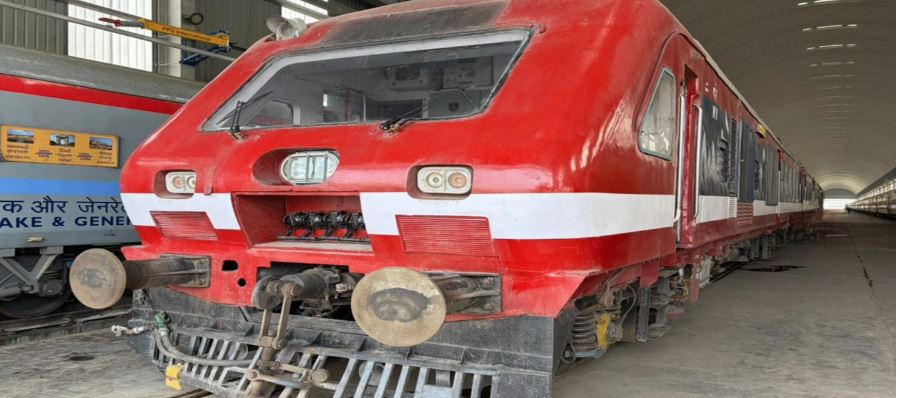
Indian Railways has taken a significant step towards cleaner and more cost-effective rail transport by launching the country’s first Liquefied Natural Gas (LNG)-diesel dual-fuel Diesel Electric Multiple Unit (DEMU) train at the Sabarmati Integrated Coaching Depot in Ahmedabad. What Is the Dual-Fuel DEMU? This 1,400 HP DEMU has been retrofitted so that its two Driving Power Cars (DPCs) operate on a dual-fuel system, blending LNG with traditional diesel. LNG replaces about 40% of diesel consumption, offering a cleaner alternative without sacrificing performance or reliability. The modified units completed successful field trials covering over 2,000 kilometers and have been operating smoothly in regular passenger service since then. Environmental and Economic Benefits The dual-fuel technology significantly cuts emissions of carbon dioxide (CO₂) and nitrogen oxides (NOx), helping improve air quality along railway routes and supporting India’s commitment to sustainable transport. Economically, LNG offers lower fuel costs compared to diesel. Each converted power car is estimated to save around ₹11.9 lakh annually, with potential savings of ₹23.9 lakh per year for a full eight-coach DEMU rake equipped with two such power cars. The system’s ability to automatically switch between LNG and diesel ensures uninterrupted performance even where LNG infrastructure is still developing. Future Prospects Encouraged by the success of the Ahmedabad unit, Indian Railways plans to expand the dual-fuel system to more DEMU power cars after completing necessary emission tests and regulatory approvals. This innovation promises to reduce diesel dependence, especially on non-electrified routes, supporting India’s transition to cleaner energy. By adopting LNG-diesel technology, Indian Railways reaffirms its commitment to greener, more efficient rail transportation, aligning with national environmental goals while maintaining operational excellence.